
Engineering in Design,
Power in Delivery.
A reliable architecture starts with a deep comprehension of project constraints and ends with engineered solutions fusing functionality, feasibility, and performance. Projects are developed with precision and creativity to address each requirement's specific needs. My technical approach emphasizes connection and synergy among people, processes, and technology to shape ideas into reality.

Feature Projects
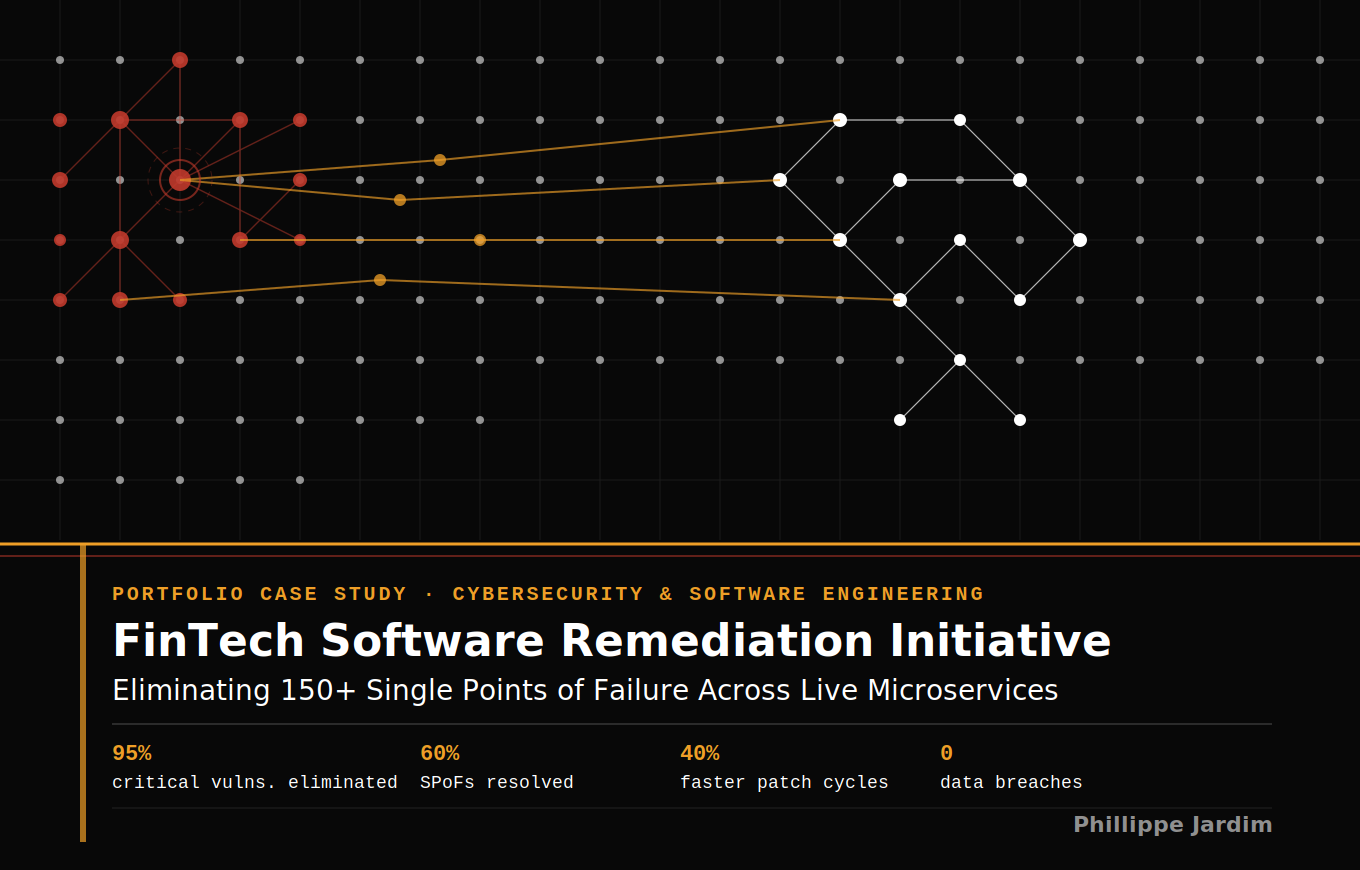
Software Remediation
A routine architecture review surfaced over 150 single points of failure across live financial systems — transaction processing, credit scoring, risk analytics, and customer onboarding — all exposed by outdated Python dependencies in a FinTech environment scaling rapidly under pandemic-era demand.
As Project Manager, I designed and led the remediation from the ground up: conducting a full dependency audit, mapping cross-service interdependencies, aligning five engineering teams under a hybrid agile framework, and embedding data security compliance into every phase of delivery — with zero production disruptions and zero data breaches.
The result: 95% reduction in critical vulnerabilities, 60% of single points of failure eliminated, and a standardized patch management process the organization continues to use today.
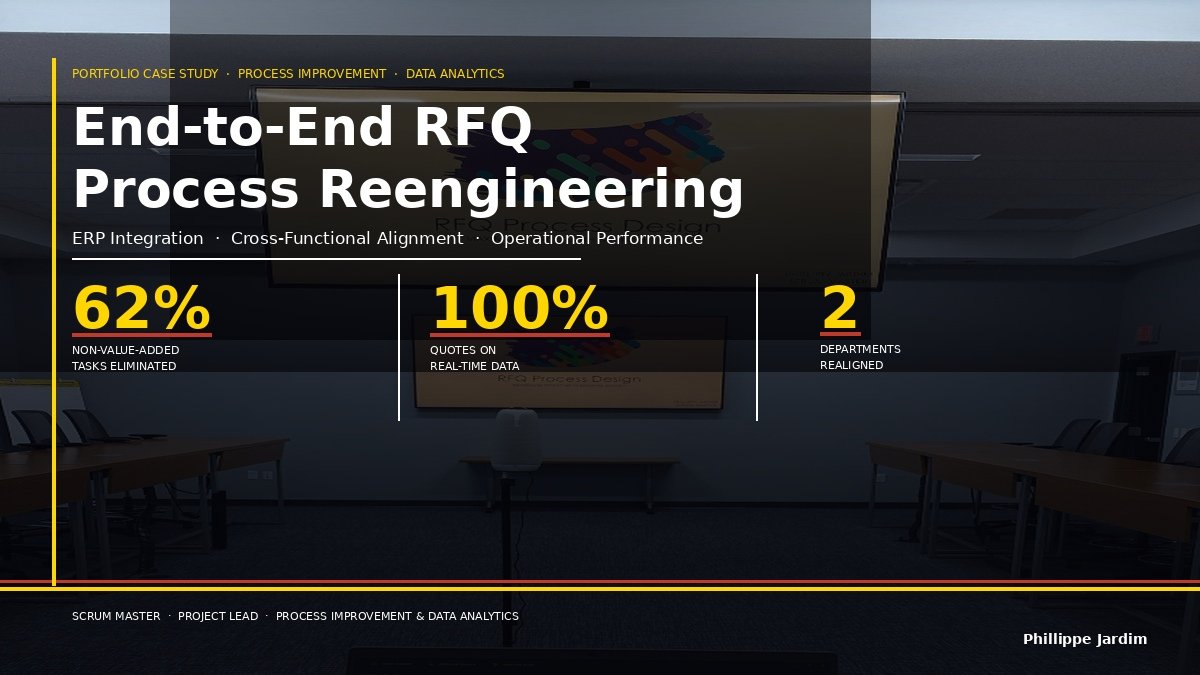
Process Reengineering
In a high-volume sales environment dependent on imported goods and volatile commodity pricing, a failing Excel-based quoting tool was generating data errors, process delays, and measurable revenue loss across sales and purchasing operations. As Project Lead for Process Improvement and Data Analytics, I diagnosed the root causes, redesigned the end-to-end RFQ workflow, and led the deployment of an ERP-integrated quoting system — eliminating 62% of non-value-added tasks, standardizing cross-departmental operations, and replacing manual data entry with real-time automation.
The result: faster quote delivery, fewer errors, recovered margin, and two departments aligned to a single performance standard.
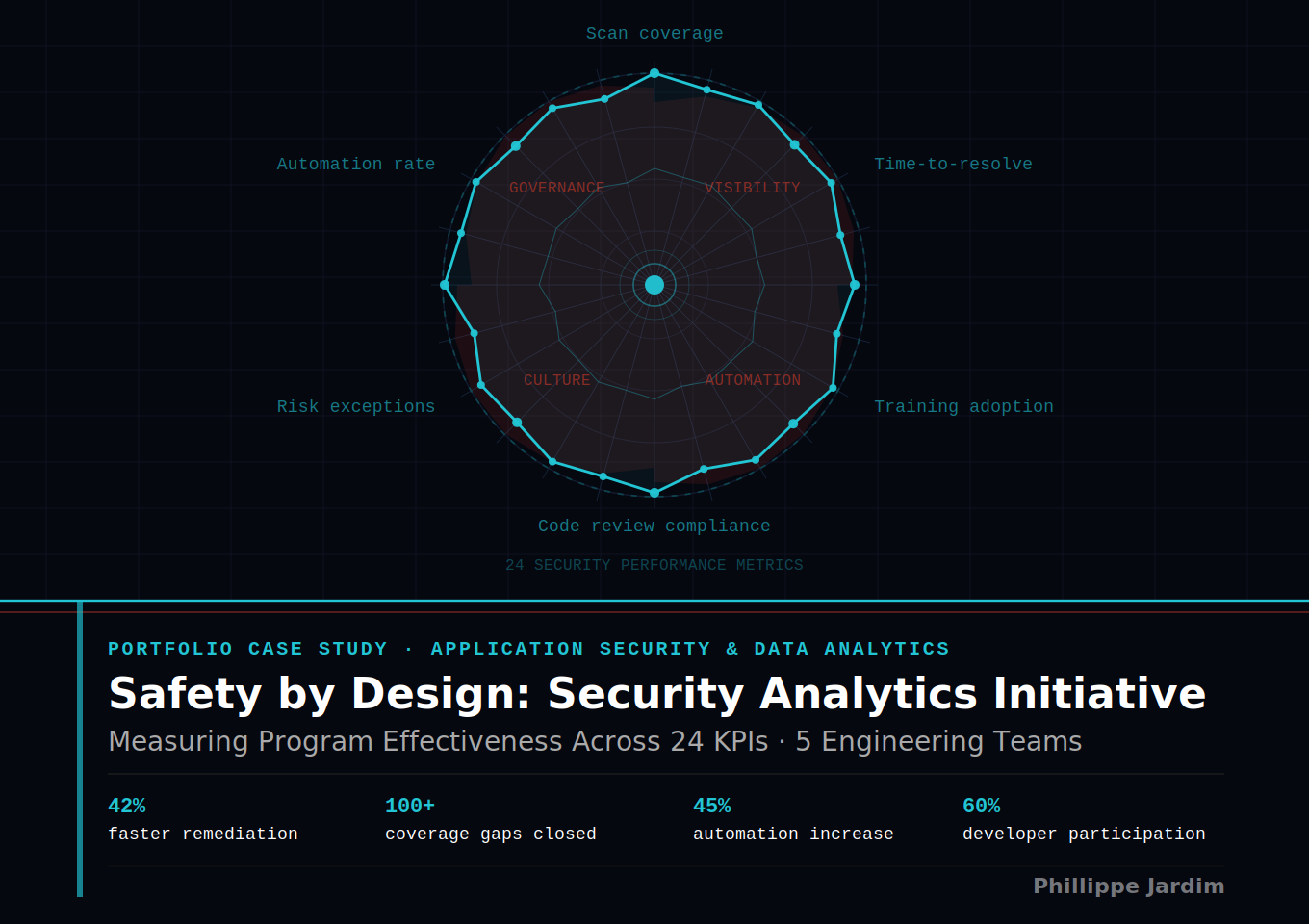
Safety By Design
Our organization had a security program in place — but no way to prove it was working. With development teams expanding rapidly and security automation struggling to keep pace, leadership faced a critical governance gap: no measurement infrastructure, no performance baseline, and no visibility into whether engineers were consistently following secure coding practices.
As Project Manager and Data Analyst, I designed and led an analytics initiative to answer those questions directly — defining 24 security KPIs, building real-time dashboards across 5 engineering teams, and translating data into targeted automation improvements and training interventions, all delivered under budget and resource constraints.
The result: 42% faster vulnerability remediation, 100+ coverage gaps closed, 45% increase in automated code review coverage, and a 60% rise in developer participation in secure coding practices.
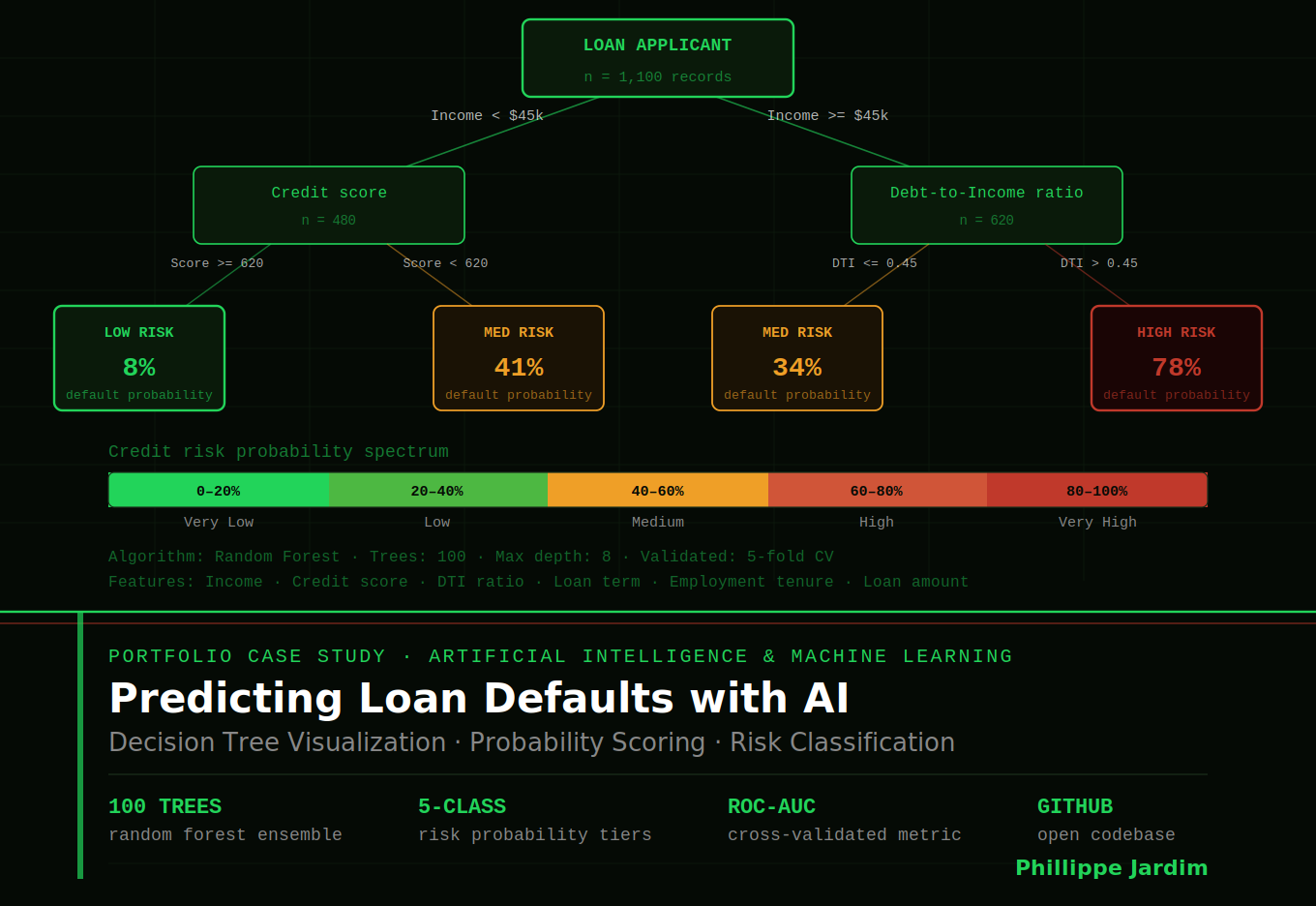
Artificial Intelligence
& Machine Learning
As project lead and data scientist, I built an end-to-end machine learning model that predicted loan default probabilities using financial and demographic data, applying Logistic Regression and Random Forest algorithms, validated through cross-validation and ROC-AUC scoring, with full model interpretability maintained throughout.
The result: a transparent, reproducible, and business-aligned credit risk tool that strengthened portfolio decisions and reduced lending exposure — with the complete codebase publicly available on GitHub for independent review.
